
 2.5 Inch Exhaust Pipes
Exhaust Pipes
You’re likely familiar with the exhaust pipe on your car or rig. It funnels carbon monoxide and other noxious fumes away from your cabin and out of your car. Exhaust pipes also work with mufflers to control sound and connect to other parts of the exhaust system to clean the fumes before releasing them into the air.
Exhaust pipes aren’t limited to vehicular use. They are also used for mining, drilling, pipelines, manufacturing, and other industrial situations in which you want to remove fumes from populated areas. You can also attach exhaust tubing to your generator to keep fumes from building up in your home.
Types of Exhaust Pipes
You’ll find exhaust pipes in different places on different vehicles because the parts they connect can vary. Common exhaust pipes include:
- Front exhaust pipes: These pipes live between the manifold and the catalytic converter. They’re great for minimizing back pressure and helping a turbo engine work optimally.
- Center exhaust pipes: These pipes live between your muffler and catalytic converter. You can modify them to improve fuel efficiency and engine performance.
- Straight pipes: If you replace your muffler and catalytic converter with a straight pipe, you get a loud, aggressive engine with higher emissions. These pipes are illegal in many locations because of sound and air pollution.
Industrial Uses for Exhaust Pipes
Toxic fumes can build up in industrial environments. You can use exhaust pipes to customize a system that works for your unique needs. Choosing stainless steel or other heat-resistant materials keeps your workers safe without presenting another safety risk. Since exhaust is hot, you'll want heat-resistant pipes and exhaust tubing. Use exhaust pipes in these environments:
- Chemical processing: Chemical plants are full of volatile organic compounds, even with good filtration. An auxiliary exhaust system can help keep the factory floor clean.
- Data centers: With AI and cloud computing rising in popularity, more data centers are popping up across the country. Generator exhaust systems with pipes and tubing help keep these facilities safe for workers.
- Auto repair shops: If you keep your garage closed in the winter to protect your crew from the elements, exhaust pipes and other system components can help your workers breathe freely on the job.
How to Choose the Right Exhaust Pipe
Exhaust pipes and tubing come in multiple sizes for different vehicles and uses. Start with your expected horsepower, and choose a pipe that is an inch in diameter for every 100 horsepower. For example, if your turbo engine reaches 300 horsepower, use a 3" exhaust pipe.
Next, choose one from a trusted brand. Truck Pipes USA offers exhaust pipes in a range of sizes from 2.5 inches in Diameter up to 15 inches. Our products are made in the USA from durable materials that can withstand heat and pressure from reliable brands such as Grand Rock and United Muffler.
If you’re not sure which type of exhaust pipe you need, contact our customer service team. We can help you find an exhaust pipe that is compatible with your engine and crafted for your needs.
2.5 Inch Exhaust Pipes 3 Inch Exhaust Pipes
 3.5 Inch Exhaust Pipes
 4 Inch Exhaust Pipes
 4.5 Inch Exhaust Pipes
 5 Inch Exhaust Pipes
 6 Inch Exhaust Pipes
 7 Inch Exhaust Pipes
 8 Inch Exhaust Pipes
 10 Inch Exhaust Pipes
Loading...
Sort by:
Products per page:


Grand Rock14-12294-1175 Peterbilt 379 Aluminized Exhaust Pipe PB-12294-11
MSRP: $167.16
$115.65
Loading...

Grand Rock14-13940-0460 Peterbilt 357,378,379 Center Pipe for Dual Exhaust 5" x 18"
MSRP: $261.62
$189.52
Loading...


Grand Rock3" x 120" Straight Cut Aluminized Exhaust Tube Stack OD End S3-120SBA
MSRP: $336.80
$223.51
Loading...
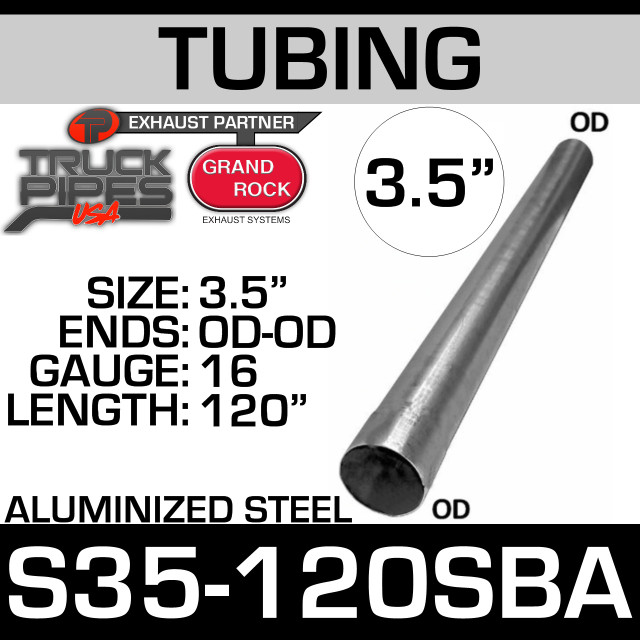

Grand Rock3.5" x 120" Straight Cut Aluminized Exhaust Tube OD Ends S35-120SBA
MSRP: $409.00
$279.00
Loading...


Grand Rock5" x 120" Straight Cut Aluminized Exhaust Stack ID End S5-120EXA
MSRP: $503.67
$390.37
Loading...
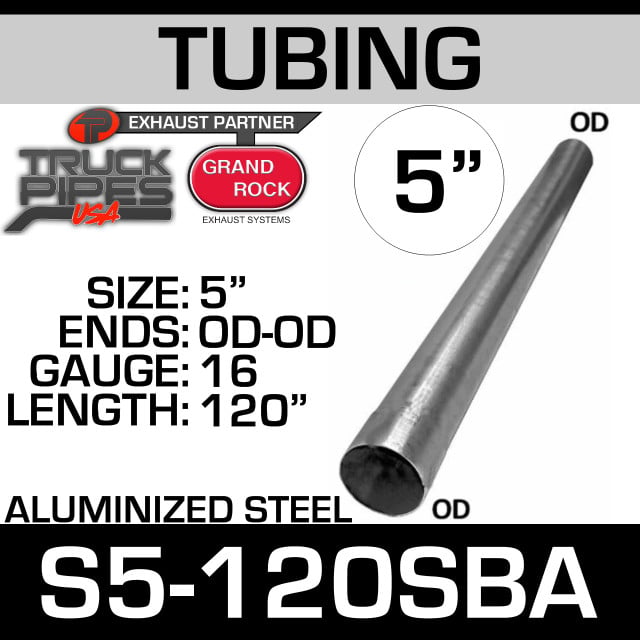
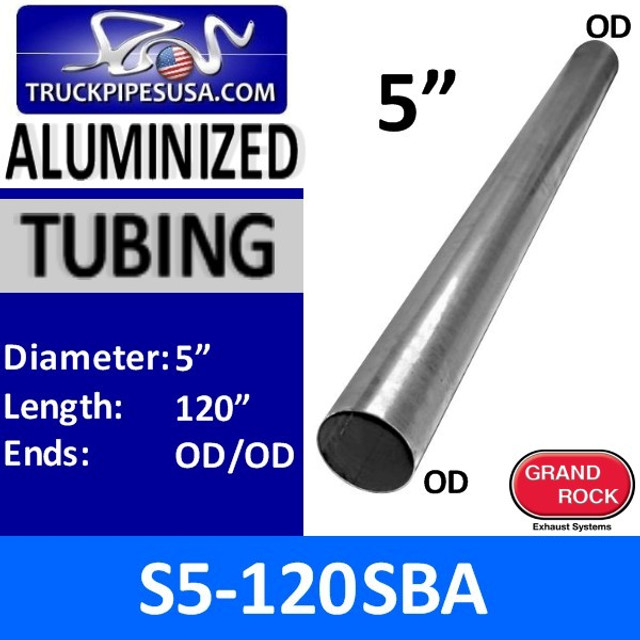
Grand Rock5" x 120" Straight Cut Aluminized Exhaust tubing OD Ends S5-120SBA
MSRP: $565.45
$513.95
Loading...


Grand Rock6" x 120" Straight Cut Aluminized Tube OD Ends 16 Gauge S6-120SBA
MSRP: $679.81
$535.61
Loading...
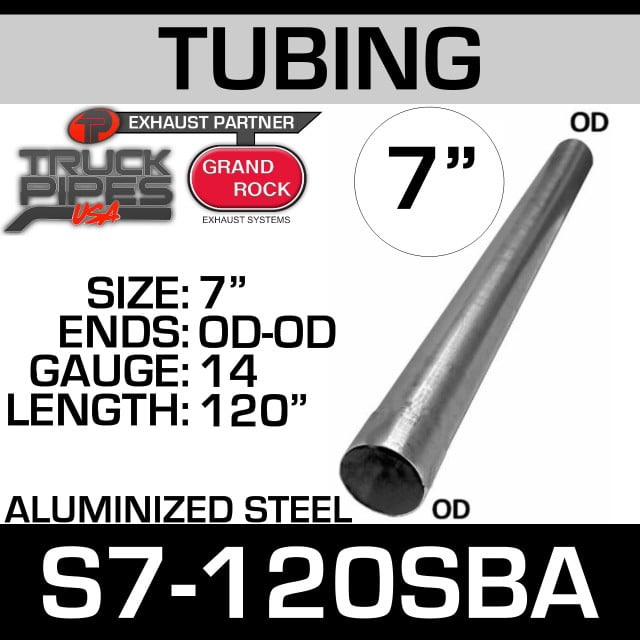
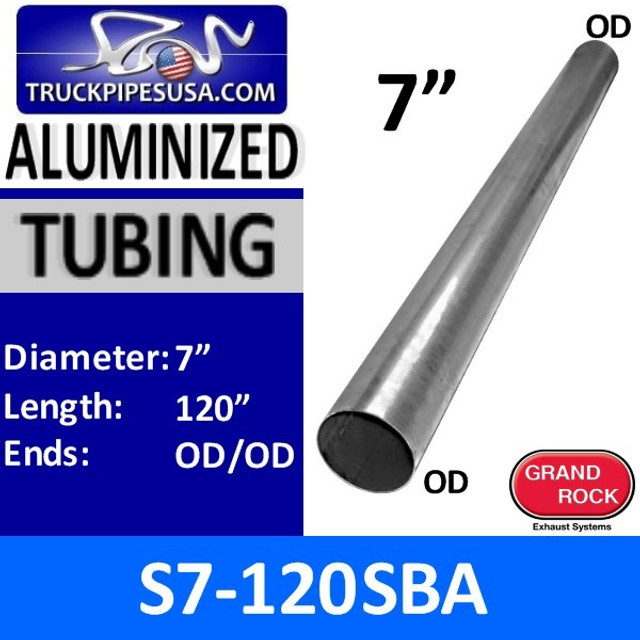


Grand Rock8" x 120" 14ga Straight Aluminized Exhaust Tubing OD-OD S8-120SBA
MSRP: $1,337.97
$1,018.67
Loading...
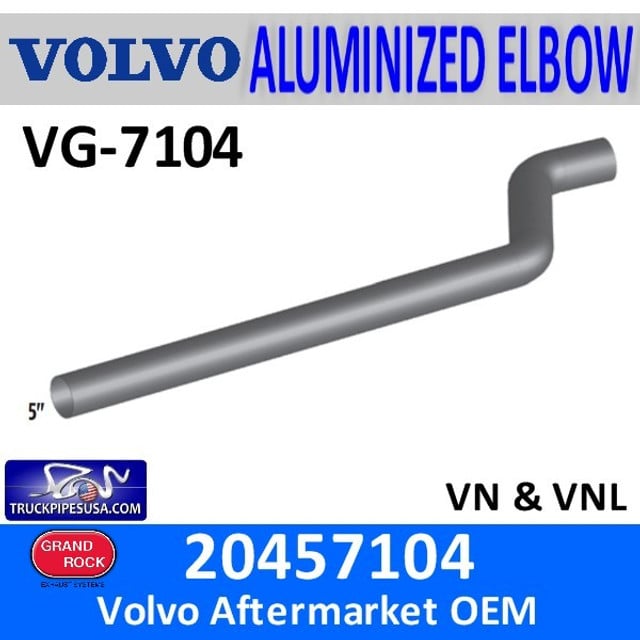


United Muffler5" Marmon Exhaust with 5.62" Flare 304 Stainless Steel 39392-L
MSRP: $142.00
$82.00
Loading...


United Muffler4" Marmon Exhaust 4.625" Flare 304 Stainless Steel 39660-L
MSRP: $132.00
$72.00
Loading...

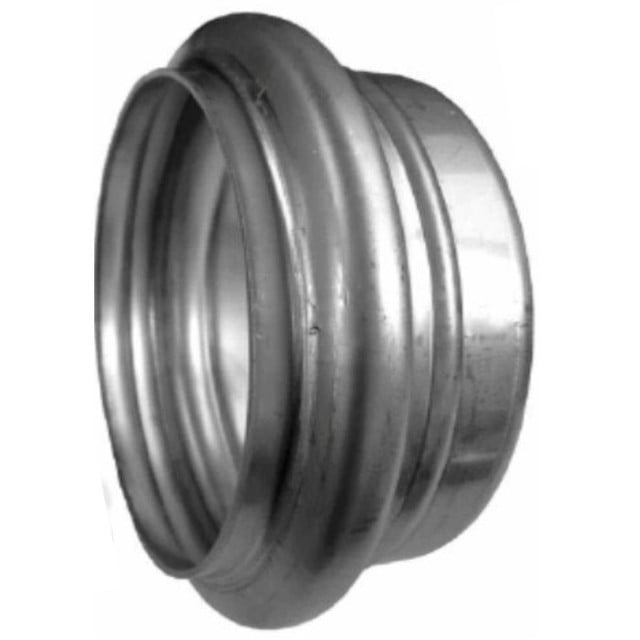


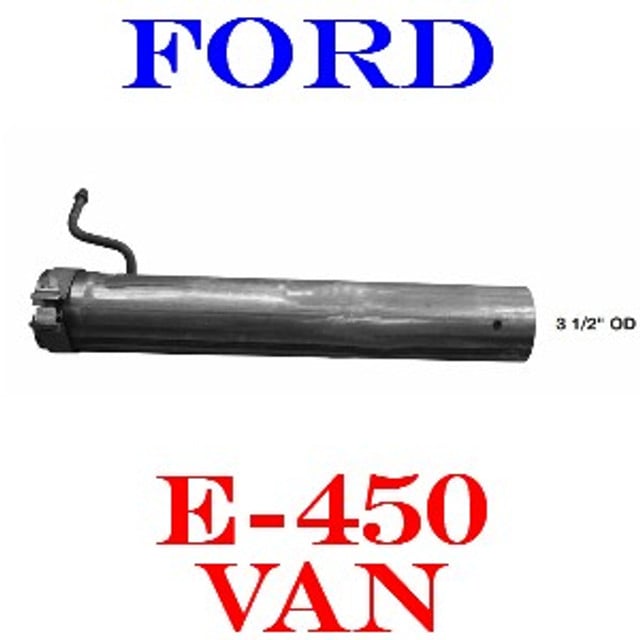


Grand RockSB1-8173BB Bluebird Bus Exhaust Elbow 3" 90 Degree OD Flare Aluminized
MSRP: $314.17
$211.16
Loading...


Grand RockSB2-8662BB 2.75" 2 Bend Bluebird Bus Exhaust ID Flare Aluminized
MSRP: $577.84
$423.34
Loading...


Grand RockSB3-4904BB 4" 2 Bend Bluebird Bus Exhaust ID Miter Aluminized
MSRP: $208.06
$115.36
Loading...
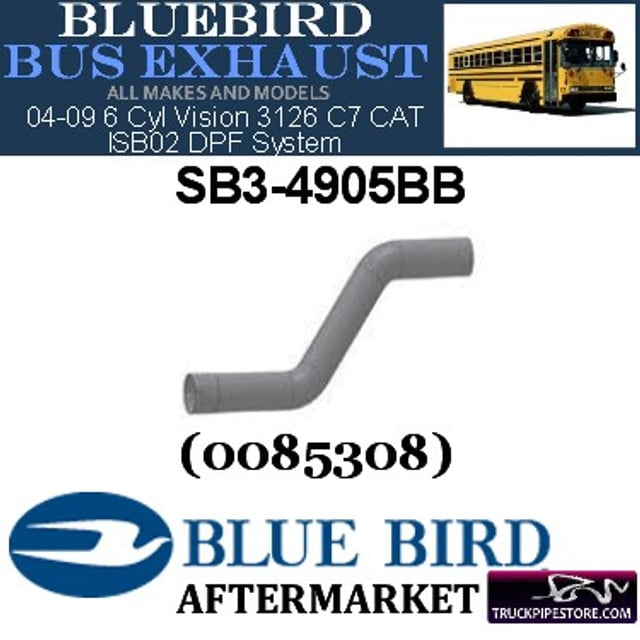


Grand Rock1997741 Bluebird Bus Exhaust with Miter 4" SB6-7741BB-SE 1998 & Up
MSRP: $419.23
$295.62
Loading...


Grand Rock3549916C1 International Bus Exhaust Straight Pipe 4" x 12" ID-OD ALZ
MSRP: $104.02
$62.82
Loading...


Grand Rock2004504C1 International Bus Pipe 2 Bend 3.5" OD Flared End ALZ
MSRP: $315.17
$243.07
Loading...
Loading...
242 products total